Core — Eastman's Paint Protection Film Installer Software
Eastman sold paint protection film and the software used to cut it. Its users were hands-on tradespeople working on customers' vehicles, with expensive film committed the moment a pattern reached the plotter.
- My role
- I owned the software and user-experience path of a cross-capability engagement, and I designed and ran both the contextual research and the later usability testing.
- What changed
- Working alongside installers in their own shops, I saw a combined physical and digital workflow that conference-room discovery had not surfaced, and that evidence shaped the software's direction.
- Public product reference
- Core, Eastman's film-cutting software, at morewithcore.com
The problem
Paint protection film is basically a clear second skin for a car. It comes in large rolls and gets cut by a plotter into patterns for a specific vehicle. Eastman sold the film, but they also supplied the pattern library and the software installers used to choose a vehicle and send those patterns to the plotter.
The people using that software were not CAD specialists. They were tradespeople working in shops that ranged from one person in a garage to dealerships wrapping every car before it hit the lot. And once a pattern went to the plotter, the film was committed. A wrong pattern was not an annoying software mistake. It was wasted material and a job that had to start over.
Everyone already knew the pattern library and legacy software had problems. What we did not really understand was what those problems looked like in the middle of somebody’s actual workday.
Two weeks in a conference room
The engagement started with a two-week discovery. We had a cross-capability team — design, development, data science, project management — interviewing people across Eastman and trying to understand the problem from every angle. We came out of that with two major tracks: improve the patterns themselves, and redesign the installer software. I took the software and UX side.
The discovery was useful, but one thing kept bothering me. We had talked to a lot of people at Eastman. We had not talked to the installers. The people actually standing next to the car, handling the film, and using the software had never been in the room. That seemed like a pretty big hole.
Going to the shops
So I planned the field research — goals, protocol, interview guide, budget — and went to Texas.
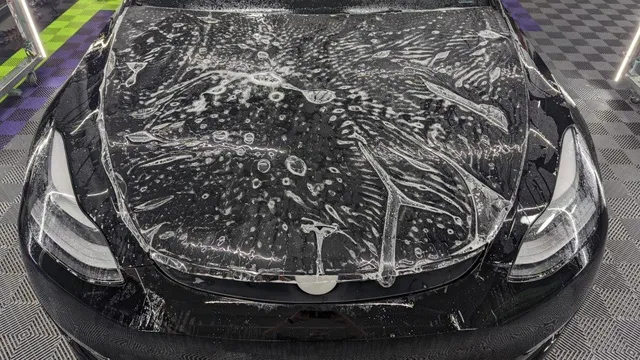
I interviewed installers in their shops and watched them work with the existing software. Watching them mattered as much as anything they told me. The software was not some isolated desktop tool. It sat in the middle of a very physical process. Someone would be handling film, moving around a vehicle, dealing with tools and water, then turning back to the computer.
That changed how I thought about the software almost immediately. It was not just about whether someone could find a pattern. It was about how much friction the software added to a process that was already demanding a lot of their attention.

The interview protocol I wrote for the Texas field research, showing how the sessions with installers were structured.
Shown as: Original.
 — open full-size image
Paint protection film being applied to a vehicle's hood, wet and still being worked into place - the physical job the software had to fit, before any of the software is introduced.
Shown as: Original.
Full-size image: PNG, 470 KB
What I heard
I went in expecting to hear complaints about the film. I mostly didn’t. Installers liked the film, and many of them wanted to use more of it. The frustration was around everything surrounding the product.
They talked about competing suppliers billing for cuts whether the film was usable or not. They talked about dealerships being questioned when the number of rolls they ordered did not line up with the number of cuts they were making. Some also described competitors using local sales information to open their own installation shops and compete directly with the people buying from them. A few were even reluctant to talk publicly about using Eastman products because they were worried about how competitors might respond.
I was not there to investigate the competitors, and I did not verify those claims. What mattered to me was that this was the environment installers believed they were operating in. That changed the meaning of waste. Waste was not just a bad user experience. A wrong cut could cost them material, money, and potentially their relationship with a supplier. So the pattern quality problem and the software problem were connected in a much more important way than I had understood going in.
Designing to the vehicle instead of the database
The existing software organized patterns as lists of part names. That makes perfect sense if you are thinking like a database. It makes less sense if you are standing next to a car.
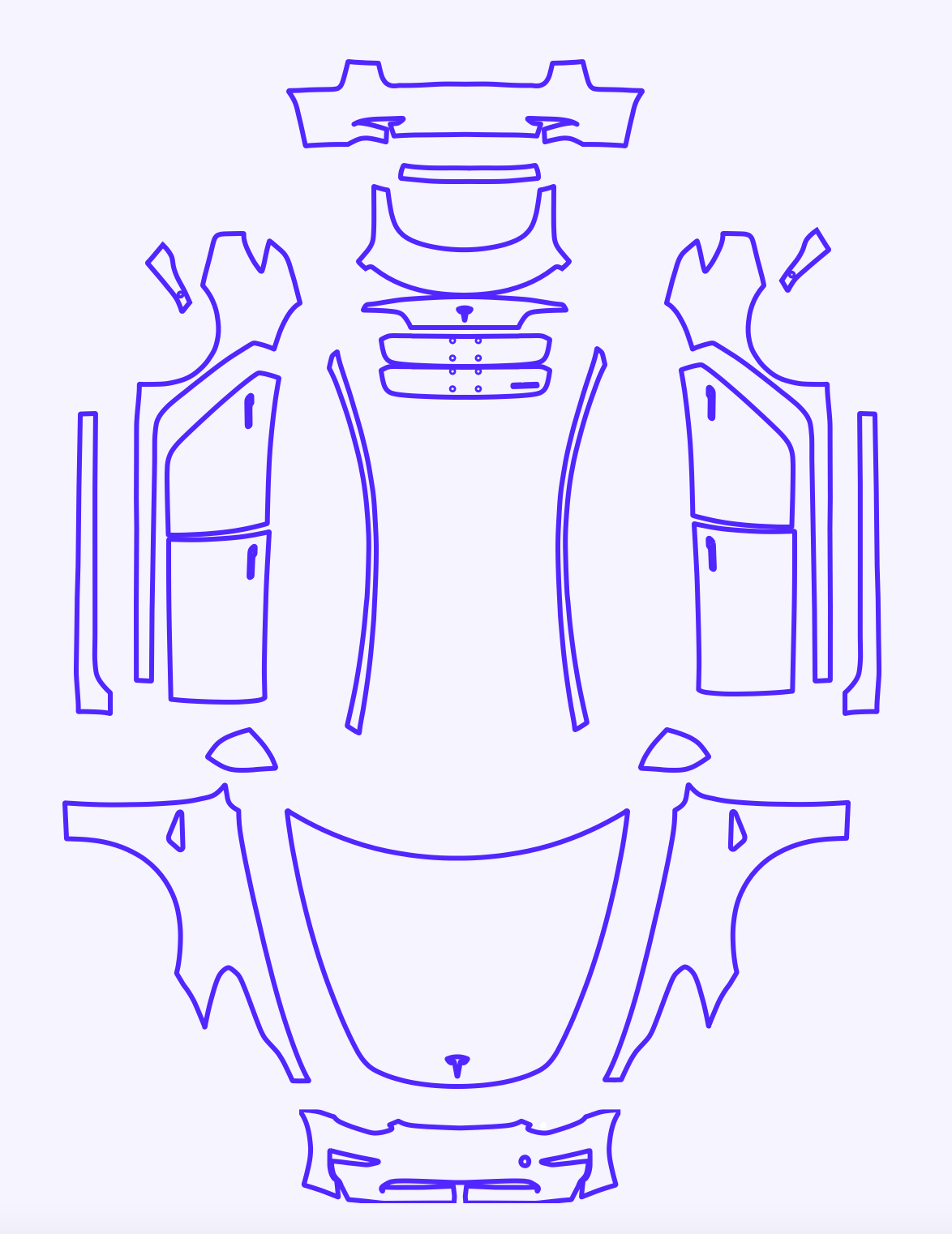
So I started designing around the vehicle itself. Instead of making installers translate a list of names into physical locations, I used an exploded view of the vehicle — panels arranged roughly where they exist on the car. You could look at the vehicle, look at the screen, and find the same thing.
This is one of those ideas that looks obvious after you see it. The software already knew the catalog. The installer already knew the car. There was no reason to make the installer do the translation work between the two.
That’s a pattern I’ve carried through most of my work: put each kind of complexity where it can be managed best.
I was reassigned to another engagement before the project finished, and another designer carried the visual design forward. I came back later to lead the next round of research.
 — open full-size image
An exploded view of a vehicle's paint protection film pattern, the form the prototype had to make workable on screen.
Shown as: Original.
Full-size image: PNG, 216 KB
Testing it
For that phase, I wrote the research plan and ran two rounds of remote usability testing. Participants were spread around the country, so we used Lookback for moderated sessions with screen recording, video, and timestamped observer notes.
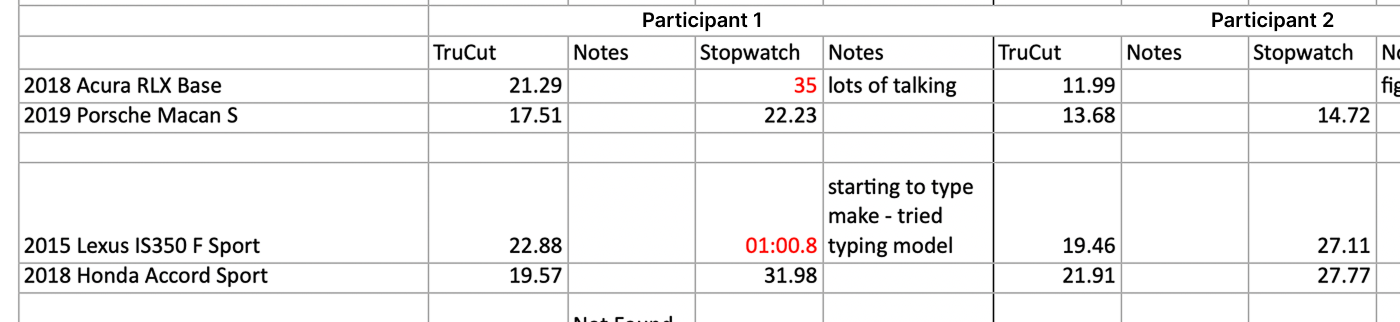
One round focused specifically on the year, make, model, and trim selection process. The engineering team had built a coded prototype, and we compared it with the existing application.
I expected the new selector to be faster. It wasn’t. That was mildly annoying because speed is a very nice thing to put on a slide. But the new version produced fewer errors.
Once I thought about what I had seen in the shops, that mattered more. A few extra seconds choosing the right vehicle was not the real cost. Choosing the wrong vehicle could mean cutting the wrong pattern, wasting film, and starting the job again. So the test gave me a better answer than the one I had been looking for. I went in measuring speed and came out understanding that error reduction was the more important measure.
That is probably the most valuable thing that round taught me. The conclusion we carried forward was this: the new pattern was not meaningfully faster, but it was less error-prone.
 — open full-size image
The round-one usability results table behind the vehicle-selection comparison: per-vehicle task times recorded for each participant in two timing columns, the observer's notes beside each attempt, and the attempts that ran long or failed marked in red.
Shown as: Redacted. Participant names in this table were replaced with role labels before publication.
Full-size image: PNG, 130 KB
What came of it
We started with a software problem described largely from inside Eastman. Then we went into the shops, and the installers changed the picture. They changed how we thought about waste, how we thought about the software’s role in the physical workflow, and how we thought about things as basic as finding a part on a vehicle.
That is the part of the work I still care about most. The installers were missing from the room, I went and got them, and the problem looked different when they came back with me.
The end-to-end usability report from the October 2019 sessions: the method, the findings screen by screen from the landing view through vehicle selection, part and kit selection, the cutboard and the toolbars, and the recommendation I made against each one.
Shown as: Redacted. Participant names in this report were replaced with role labels before publication.